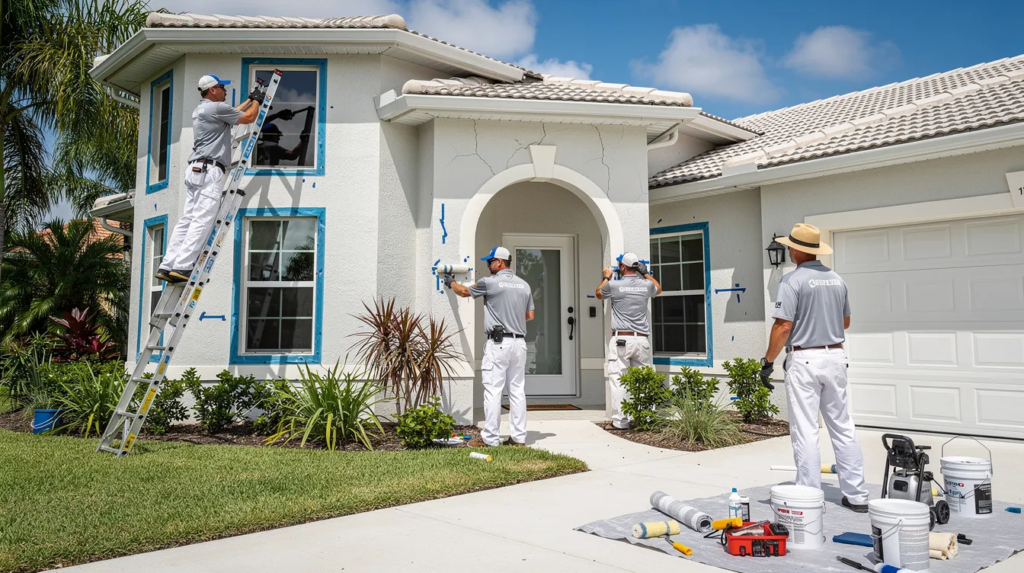
If there is one piece of advice that every professional painter in Florida agrees on, it is this: the quality of a paint job is determined more by the preparation than by the paint itself. And the most critical preparation step for any Florida exterior painting project is thorough pressure washing. At Ocala Painting Pros, we have seen thousands of paint jobs — both those we have done and those we have been called to fix — and the single most common cause of premature paint failure is inadequate surface preparation. In this article, we explain exactly why pressure washing is non-negotiable before any exterior painting project in Florida, and what a proper pressure washing process looks like.
Florida’s Unique Surface Contamination Challenges
Florida’s climate creates surface contamination conditions that are far more severe than in most other parts of the country. Understanding what is actually on your home’s exterior surfaces — and why it must be removed before painting — will help you appreciate why this step cannot be skipped.
Mildew and Algae Growth
Ocala’s combination of heat, humidity, and abundant rainfall creates ideal conditions for mildew and algae growth on exterior surfaces. These biological contaminants are often invisible to the naked eye in their early stages but can be detected as a gray or greenish discoloration on stucco, wood, and other surfaces. Painting over mildew or algae without killing and removing it first is one of the most common causes of premature paint failure — the biological growth continues to expand beneath the new paint film, causing bubbling, peeling, and discoloration within months.
A proper pressure washing process for Florida homes includes the application of a mildewcide solution before washing — typically a diluted bleach or commercial mildewcide product — that kills biological growth at the root level. Simply washing with water alone will remove visible mildew but leave the root structure intact, allowing it to regrow quickly. Our exterior painting process always includes a full mildewcide treatment as part of the pressure washing step.
Oxidized Paint and Chalking
Florida’s intense UV radiation causes exterior paint to oxidize over time, producing a chalky, powdery residue on the surface. This oxidized layer is completely incompatible with new paint — if you apply fresh paint over a chalky surface, the new paint bonds to the chalk rather than to the substrate, and the entire paint film will peel away as the chalk continues to release. Pressure washing at sufficient pressure removes this oxidized layer, exposing the sound paint beneath and creating a proper bonding surface for the new coat.
Dirt, Pollen, and Environmental Deposits
Florida’s environment deposits a constant layer of dust, pollen, bird droppings, tree sap, and other organic matter on exterior surfaces. While these deposits may seem minor, they create a barrier between the substrate and the new paint that compromises adhesion. A thorough pressure washing removes all surface contamination and leaves a clean, receptive surface for primer and paint.
The Right Pressure Washing Technique for Florida Homes
Not all pressure washing is created equal. Using the wrong technique — too much pressure, the wrong nozzle, or the wrong cleaning solution — can actually damage your home’s exterior surfaces and create more problems than it solves. Here is what proper pressure washing looks like for Florida stucco homes:
Pressure Settings
For stucco surfaces, we use a pressure setting of 1,500–2,500 PSI with a 25-degree or 40-degree fan nozzle. Higher pressures can damage stucco, force water behind the surface, and create new cracks that will need to be repaired before painting. For wood surfaces, we use lower pressure — typically 1,000–1,500 PSI — to avoid raising the wood grain or forcing water into joints and seams.
Cleaning Solution Application
Before applying water pressure, we apply a mildewcide cleaning solution using a low-pressure application (under 500 PSI) and allow it to dwell on the surface for 10–15 minutes. This dwell time is critical — it allows the mildewcide to penetrate and kill biological growth rather than simply washing it away. After the dwell period, we rinse thoroughly with clean water at appropriate pressure, working from top to bottom to prevent dirty water from running over already-cleaned surfaces.
Drying Time
After pressure washing, the surface must be allowed to dry completely before any primer or paint is applied. In Ocala’s climate, this typically means waiting 24–48 hours after washing before painting begins. Applying paint to a damp surface traps moisture beneath the paint film, leading to bubbling, blistering, and adhesion failure. We schedule our projects to allow adequate drying time between washing and painting, even if it means a brief delay in the painting start date.
Identifying and Repairing Surface Damage Before Painting
Pressure washing does more than clean — it also reveals surface damage that may not be visible on a dirty exterior. Cracks, holes, delaminated stucco, and deteriorated caulk joints all become clearly visible after washing, and addressing these issues before painting is essential for a lasting result.
On stucco homes, hairline cracks are common and can be addressed with a flexible elastomeric caulk or crack filler before priming. Larger cracks or areas of delaminated stucco require patching with a stucco repair compound and may need to cure for several days before painting. All caulk joints around windows, doors, and trim should be inspected and recaulked where the existing caulk has cracked, shrunk, or pulled away from the substrate — these gaps are entry points for water that can cause serious damage over time.
The Cost of Skipping Pressure Washing
Some painting contractors — particularly those offering unusually low prices — skip or minimize the pressure washing step to reduce their labor costs and time on the job. This false economy costs homeowners far more in the long run. A paint job applied over inadequately prepared surfaces will begin to fail within 1–3 years, requiring a complete repaint at full cost. A properly prepared paint job, by contrast, will last 7–12 years or more.
When evaluating painting contractors, always ask specifically about their pressure washing and surface preparation process. A contractor who cannot describe a thorough, multi-step preparation process — or who offers to skip washing to save time or money — is not a contractor you want working on your home. At Ocala Painting Pros, we never compromise on surface preparation, because we know that our reputation depends on the longevity of our work.
Frequently Asked Questions About Pressure Washing and Surface Preparation
Can I pressure wash my home myself before the painters arrive?
You can, but we recommend letting our crew handle it as part of the painting project. DIY pressure washing often misses the mildewcide treatment step, uses incorrect pressure settings that can damage surfaces, and may not achieve the thorough cleaning that professional equipment provides. When we handle the washing, we can also identify and document any surface damage that needs to be addressed before painting begins.
How soon after pressure washing can painting begin?
We wait a minimum of 24 hours after pressure washing before applying any primer or paint. In humid conditions or after heavy rain, we may wait 48 hours to ensure the surface is completely dry. Rushing this step is one of the most common causes of paint adhesion failure.
Does pressure washing remove existing paint?
Properly applied pressure washing at appropriate settings should not remove sound, well-adhered paint. However, it will remove paint that is already failing — peeling, bubbling, or poorly adhered paint will come off during washing, which is actually desirable. Removing failing paint before applying new paint is essential for a lasting result. Any areas where paint is removed during washing will be primed and repainted as part of the project.
Ready for a professional exterior paint job that starts with thorough preparation and lasts for years? Contact Ocala Painting Pros for your free estimate, or call (352) 565-7149. Read our related article on how long exterior paint lasts in Florida to understand what proper preparation means for your paint job’s longevity.