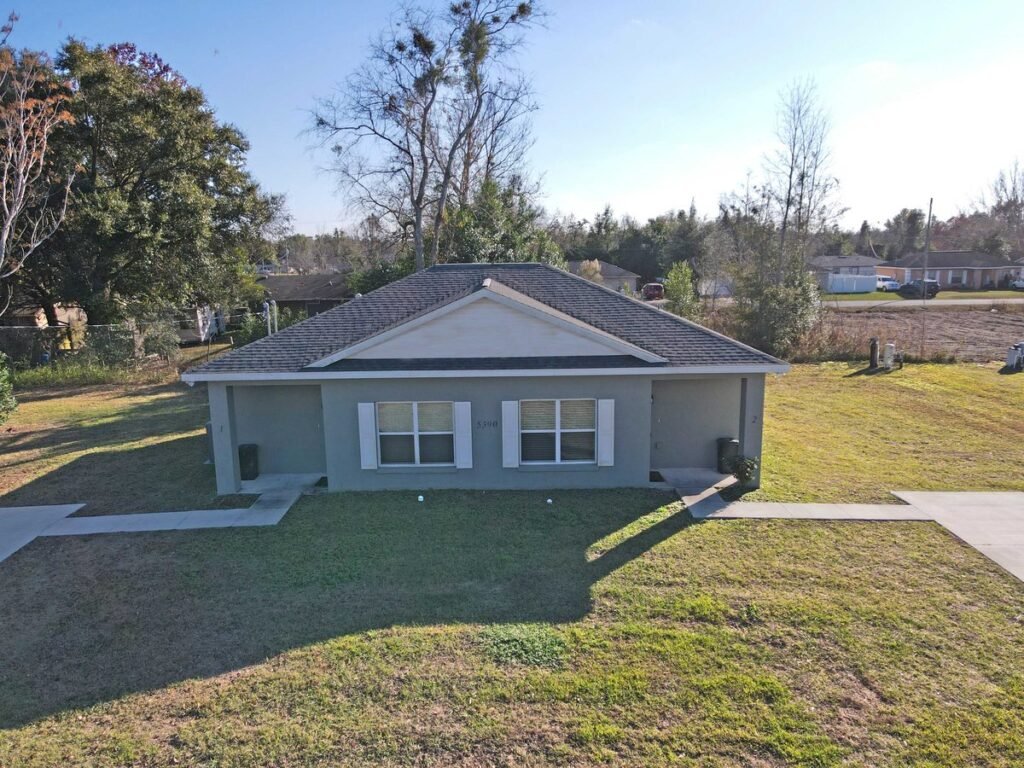
One of the most common questions we receive from homeowners across Ocala’s 55+ communities is: “How long will my exterior paint last?” It is a completely reasonable question — exterior painting is a significant investment, and knowing what to expect in terms of longevity helps you plan and budget accordingly. The honest answer is that it depends on several factors, and understanding those factors will help you make decisions that maximize the lifespan of your paint job. At Ocala Painting Pros, we have been painting homes in Florida’s climate for over 30 years, and we want to share the real-world knowledge that comes from that experience.
The Florida Climate Challenge
Florida is one of the most demanding environments for exterior paint in the United States. The combination of factors that make Florida such a desirable place to live — abundant sunshine, warm temperatures, and lush vegetation — also creates conditions that accelerate paint degradation faster than in almost any other state.
UV Radiation: The Primary Enemy of Exterior Paint
Florida receives more annual sunshine than any state except Arizona, and UV radiation is the primary cause of exterior paint degradation. UV rays break down the polymer chains in paint binders, causing the paint film to become brittle, chalky, and prone to cracking. This process — called photodegradation — is continuous and cumulative. The more UV exposure a surface receives, the faster the paint degrades. South-facing and west-facing walls receive the most direct sun exposure and will show signs of fading and chalking before north-facing and east-facing walls on the same home.
Humidity and Moisture Cycling
Ocala’s average relative humidity ranges from 55% to 85% throughout the year, with the highest humidity during the summer rainy season. This constant moisture cycling — surfaces absorbing moisture during humid conditions and releasing it during dry periods — causes the substrate to expand and contract repeatedly. Paint films that cannot flex with this movement will crack and peel over time. This is why elastomeric paints, which contain rubber-like polymers that allow the film to flex, are particularly well-suited to Florida’s stucco homes.
Biological Growth
As we discussed in our article on pressure washing before painting, Florida’s warm, humid climate creates ideal conditions for mildew, algae, and other biological growth on exterior surfaces. These organisms not only discolor paint but also physically degrade the paint film over time, accelerating its breakdown. Premium exterior paints with mildewcide additives significantly slow this process, but no paint is completely immune to biological growth in Florida’s climate.
Realistic Paint Longevity Expectations in Ocala
Given Florida’s demanding climate, here are realistic longevity expectations for exterior paint in Ocala, organized by product quality and preparation quality:
Budget Products with Minimal Preparation: 2–4 Years
Paint jobs using budget-grade products applied over inadequately prepared surfaces — surfaces that have not been thoroughly cleaned, treated for mildew, and properly primed — will begin to show significant deterioration within 2–4 years. Fading, chalking, mildew growth, and peeling are all common outcomes. Unfortunately, this is the result that many homeowners get when they choose the lowest-bid contractor without understanding what proper preparation entails.
Mid-Range Products with Standard Preparation: 5–7 Years
A paint job using mid-range products like Sherwin-Williams SuperPaint or Benjamin Moore Regal Select, applied over properly cleaned and primed surfaces, can be expected to last 5–7 years in Florida’s climate. This is the baseline that most professional painting contractors in Ocala deliver, and it represents a reasonable balance of cost and longevity for most homeowners.
Premium Products with Thorough Preparation: 8–12 Years
Using premium products specifically formulated for Florida’s climate — Sherwin-Williams Emerald Exterior, Benjamin Moore Aura Exterior, or elastomeric coatings for stucco homes — combined with thorough surface preparation including mildewcide treatment, crack repair, and professional-grade primer, can extend exterior paint longevity to 8–12 years or more. This is the standard we hold ourselves to at Ocala Painting Pros, and it is why our clients do not need to repaint nearly as frequently as those who chose lower-quality contractors.
Factors That Affect Your Specific Paint Job’s Longevity
Beyond product quality and preparation, several home-specific factors influence how long your exterior paint will last:
Sun Exposure
As noted above, south-facing and west-facing walls receive the most UV exposure and will fade and degrade faster than other walls. If your home has significant west-facing exposure — common in many Ocala neighborhoods where homes face east-west streets — you may want to consider a premium UV-resistant product specifically for those surfaces, even if you use a standard product on the more protected walls.
Tree Coverage
Homes with significant tree coverage face a different set of challenges. While trees provide shade that reduces UV degradation, they also trap moisture, drop organic matter (leaves, pollen, sap) onto surfaces, and create conditions that promote mildew and algae growth. Homes surrounded by mature oaks or other large trees typically need more frequent pressure washing and may benefit from a higher concentration of mildewcide in the paint formulation.
Irrigation Patterns
Irrigation systems that spray water directly onto the home’s exterior — a surprisingly common issue in Ocala’s 55+ communities — significantly accelerate paint degradation by keeping surfaces wet for extended periods and depositing mineral deposits from hard water. If your irrigation system sprays the house, we strongly recommend adjusting the heads to direct water away from the structure before your next paint job.
Signs That Your Exterior Paint Needs Attention
Knowing when your exterior paint is approaching the end of its useful life — and catching problems early — can save you significant money by allowing for targeted touch-up work rather than a full repaint. Here are the warning signs to watch for during your annual home inspection:
Chalking — a powdery residue that comes off on your hand when you rub the painted surface — indicates that the paint binder has broken down and the paint is no longer providing adequate protection. Fading beyond the normal gradual color shift indicates UV degradation. Mildew or algae growth — visible as gray, green, or black discoloration — indicates that the paint’s mildewcide additives have been depleted. Peeling, bubbling, or cracking indicates adhesion failure, often caused by moisture infiltration or inadequate surface preparation during the original paint job.
Extending the Life of Your Exterior Paint
There are several maintenance practices that can extend the life of your exterior paint job and delay the need for a full repaint:
Annual pressure washing removes biological growth and environmental deposits before they can degrade the paint film. Prompt caulk maintenance — inspecting and recaulking any joints that have cracked or pulled away — prevents moisture infiltration that leads to paint failure and substrate damage. Touch-up painting of any areas where the paint has been damaged — by impact, abrasion, or localized peeling — prevents moisture from reaching the substrate and causing more extensive damage. Our touch-up painting service is specifically designed for this type of targeted maintenance work.
Frequently Asked Questions About Exterior Paint Longevity in Florida
Should I use flat or satin finish for my Florida home exterior?
For most Florida home exteriors, we recommend a satin or low-sheen finish rather than flat. Satin finishes are more resistant to mildew, easier to clean, and more durable in Florida’s climate. Flat finishes, while they minimize surface imperfections, are more porous and more susceptible to biological growth. The exception is rough stucco textures, where a flat or low-sheen finish may be preferred for aesthetic reasons.
Does the color affect how long the paint lasts?
Yes, to some extent. Darker colors absorb more UV radiation and tend to fade faster than lighter colors. However, the quality of the paint product and the thoroughness of the preparation have a much greater impact on longevity than color choice. A light color applied with a budget product will fail faster than a dark color applied with a premium UV-resistant product.
How do I know if I need a full repaint or just touch-ups?
If the deterioration is localized — limited to specific areas or walls — touch-up painting may be sufficient. If the paint is failing broadly across the entire exterior, a full repaint is the more cost-effective long-term solution. We offer free inspections and honest assessments — we will never recommend a full repaint when touch-ups will do the job. Contact us for a free evaluation of your home’s exterior.
Ready to invest in a paint job that will last? Contact Ocala Painting Pros today for your free estimate, or call (352) 565-7149. Also explore our full range of painting services and our project gallery to see the quality of our work firsthand.