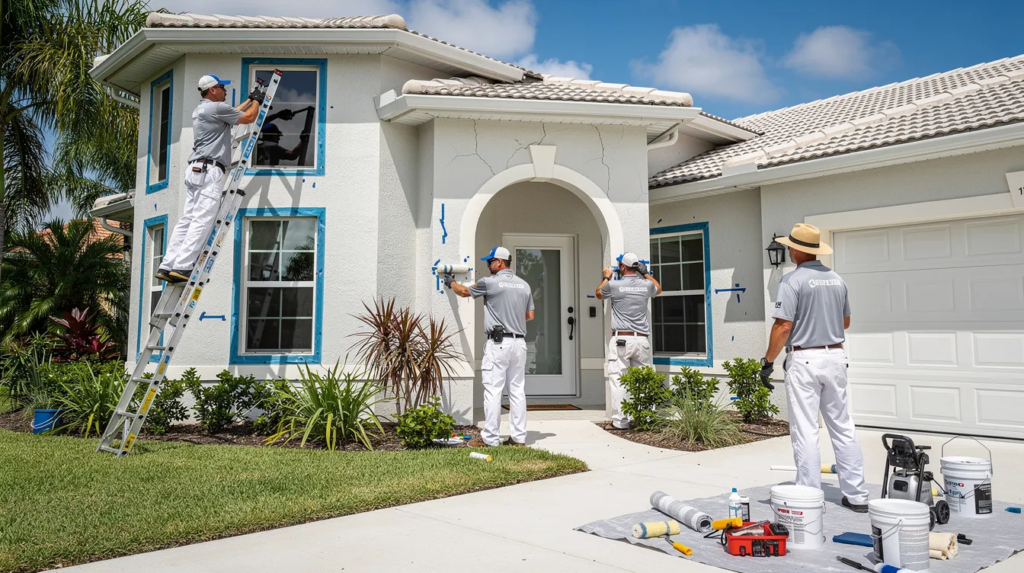
Interior painting is one of the most cost-effective ways to completely transform the look and feel of your home. Whether you are refreshing a single room, updating your entire home before listing it for sale, or personalizing a newly purchased property in one of Ocala’s premier 55+ communities, the right interior paint colors and finishes can make a dramatic difference in how your home looks, feels, and functions. At Ocala Painting Pros, we have transformed thousands of interiors across Marion County, and we want to share the professional knowledge that makes our results consistently exceptional.
The Psychology of Interior Paint Colors
Color is not merely decorative — it has a measurable psychological impact on mood, energy levels, perceived room size, and even appetite. Understanding the basics of color psychology will help you make more intentional choices that enhance the way you experience each room in your home.
Warm colors — reds, oranges, yellows, and warm neutrals — create feelings of energy, warmth, and intimacy. They make large, open spaces feel more inviting and cozy, and they stimulate conversation and appetite, which is why warm tones work so well in dining rooms and social spaces. Cool colors — blues, greens, and cool grays — have the opposite effect, promoting calm, focus, and relaxation. They make rooms feel larger and more serene, which is why they are so popular in bedrooms and bathrooms. Neutral colors — whites, beiges, greiges, and warm grays — are the workhorses of interior design, providing a flexible backdrop that allows furniture, artwork, and architectural details to take center stage.
Living Room and Open-Plan Spaces
The living room is typically the largest and most visible space in your home, and it sets the tone for the entire interior. In Ocala’s 55+ communities, where open-plan layouts are common, the living room color often flows into the dining area and kitchen, making cohesion especially important.
Best Colors for Living Rooms in Florida Homes
For Florida living rooms, we consistently recommend warm, light neutrals that reflect natural light and create a bright, airy atmosphere. Sherwin-Williams Accessible Beige (SW 7036), Benjamin Moore Pale Oak (OC-20), and Behr Cameo Rose (PPU2-11) are perennial favorites that work beautifully with Florida’s natural light and the warm wood tones common in Ocala home interiors. If you want to add more personality, consider a single accent wall in a deeper, complementary color — a dusty blue, sage green, or warm terracotta can add visual interest without overwhelming the space.
Sheen Selection for Living Rooms
For living room walls, we typically recommend an eggshell or satin finish. These sheens provide just enough reflectivity to make colors appear richer and more vibrant than flat paint, while still being easy to clean — an important consideration in high-traffic living areas. Flat paint, while beautiful in photographs, shows every scuff and fingerprint and is difficult to clean without removing the paint film. Reserve flat finishes for ceilings, where they minimize the appearance of imperfections and reduce glare.
Bedrooms: Creating Your Personal Sanctuary
The bedroom is your most personal space — the room where you begin and end each day. The colors you choose here have a direct impact on the quality of your sleep and your overall sense of well-being. Research consistently shows that cool, muted colors promote better sleep quality than warm, stimulating colors.
Best Colors for Master Bedrooms
Soft blues, muted greens, and warm lavenders are our top recommendations for master bedrooms. Colors like Sherwin-Williams Rainwashed (SW 6211), Benjamin Moore Quiet Moments (AF-780), and Behr Dusty Miller (PPU12-10) create a serene, spa-like atmosphere that promotes relaxation and restful sleep. If you prefer a warmer palette, consider soft, muted versions of warm neutrals — a warm greige or a soft blush can feel just as calming as a cool blue when the saturation is kept low.
Guest Bedrooms and Flex Rooms
Guest bedrooms benefit from a welcoming, neutral palette that appeals to a wide range of visitors. Warm whites, soft grays, and light taupes are safe, universally appealing choices that make guests feel comfortable without imposing a strong aesthetic. If your guest room doubles as a home office or hobby room, consider a slightly more energizing color — a soft sage green or a light, warm yellow can provide gentle stimulation for daytime activities while remaining calm enough for overnight guests.
Kitchens: Balancing Function and Style
Kitchen painting requires special consideration because of the unique demands of the space — heat, moisture, cooking vapors, and frequent cleaning all take a toll on paint finishes. The right product selection is just as important as the right color choice in a kitchen environment.
Best Colors for Kitchens
White and off-white remain the most popular kitchen colors for good reason — they reflect light, make the space feel larger and cleaner, and provide a neutral backdrop for colorful accessories and food. However, all-white kitchens can feel cold and sterile if not balanced with warm wood tones, metallic accents, or colorful tile. Consider a warm white with yellow or cream undertones rather than a stark, cool white for a more inviting atmosphere.
If you are looking for something more distinctive, soft sage green, warm gray, and navy blue are all trending strongly in kitchen design right now. These colors work particularly well on lower cabinets, with white or off-white upper cabinets and a contrasting island for a sophisticated, layered look. Our cabinet painting service is one of our most popular offerings, and we can transform your kitchen cabinets in any color you choose — often for a fraction of the cost of cabinet replacement.
Sheen Selection for Kitchens
In kitchens, we always recommend a semi-gloss or satin finish on walls, and a semi-gloss or gloss finish on cabinets and trim. These higher-sheen finishes are more resistant to moisture, grease, and cleaning chemicals, and they are far easier to wipe clean than eggshell or flat finishes. The additional reflectivity also helps brighten kitchens that may not have abundant natural light.
Bathrooms: Small Spaces, Big Impact
Bathrooms present unique challenges for interior painting — high humidity, temperature fluctuations, and the need for easy cleaning all demand specific product choices. But bathrooms also offer a wonderful opportunity to make a bold design statement in a small, contained space.
Best Colors for Bathrooms
Cool blues, soft greens, and crisp whites are classic bathroom choices that evoke cleanliness and spa-like serenity. In smaller bathrooms, lighter colors help the space feel larger and more open. In larger master bathrooms, you have more freedom to experiment with deeper, more dramatic colors — a rich navy, a deep forest green, or a warm charcoal can create a luxurious, hotel-like atmosphere when paired with white fixtures and brass or chrome hardware.
Moisture-Resistant Paint for Bathrooms
Standard interior paints are not formulated to withstand the constant humidity of a bathroom environment. We always use bathroom-specific paints — products that contain mildewcide additives and are formulated with moisture-resistant binders — in all bathroom applications. This is not an area where it pays to cut corners; using the wrong product in a bathroom can lead to peeling, mildew growth, and the need to repaint within a year or two.
Ceilings, Trim, and Accent Details
A truly professional interior paint job pays as much attention to ceilings, trim, doors, and accent details as it does to the walls. These elements are what separate a polished, high-end result from a basic paint job.
Ceilings are almost universally painted in flat white or off-white, which minimizes the appearance of imperfections and creates a clean, bright overhead plane that makes rooms feel taller. Trim — baseboards, door casings, window frames, and crown molding — is typically painted in a semi-gloss white or off-white that provides a crisp contrast to wall colors and highlights the architectural details of your home. Interior doors can be painted to match the trim for a seamless look, or in a contrasting color for a more contemporary, design-forward statement.
Frequently Asked Questions About Interior Painting
How long does interior painting take?
A single room typically takes one day. A full home interior — including walls, ceilings, trim, and doors — usually takes 3–7 days depending on the size of the home, the number of rooms, and the complexity of the prep work required. We provide a detailed timeline in our written estimate so you can plan accordingly.
Do I need to move all my furniture before the painters arrive?
We ask that you clear small items, artwork, and valuables from the rooms being painted. For large furniture, our crew will move pieces to the center of the room and cover them with drop cloths. We take great care to protect your belongings, flooring, and fixtures throughout the painting process.
How do I choose between eggshell and satin finish?
Both eggshell and satin are good choices for living areas and bedrooms. Eggshell has a very subtle sheen that looks more like flat paint while still being washable. Satin has a slightly higher sheen that is more durable and easier to clean, making it the better choice for high-traffic areas and homes with children or pets. We are happy to discuss the trade-offs during your free estimate appointment.
Ready to transform your home’s interior with professional results that last? Contact Ocala Painting Pros for your free estimate, or call (352) 565-7149. We serve all of Ocala’s 55+ communities and the greater Marion County area. Also explore our exterior paint color guide to complete your home’s transformation inside and out.